THE SIGNS
Ulcers, patches, lumps
The NHS lists a mouth ulcer lasting more than 3 weeks, a red or white patch, a lump in the mouth or on the lip, and a lump in the neck or throat.
Check a sign doodledent
WHAT NHS GUIDANCE SAYS
Not every mouth ulcer is a worry.

3 WEEKS the ulcer line
66–70 years When most people are diagnosed
The NHS lists a few signs worth getting checked by a GP or dentist, starting with an ulcer that lasts more than 3 weeks. These signs are common and usually caused by something else, but finding cancer early may make it easier to treat.
THE SHORT ANSWER
Mouth cancer can affect the gums, tongue,
inside of the cheeks or the lips.
THE SIGNS
The NHS lists a mouth ulcer lasting more than 3 weeks, a red or white patch, a lump in the mouth or on the lip, and a lump in the neck or throat.
Check a signTHE CHECK
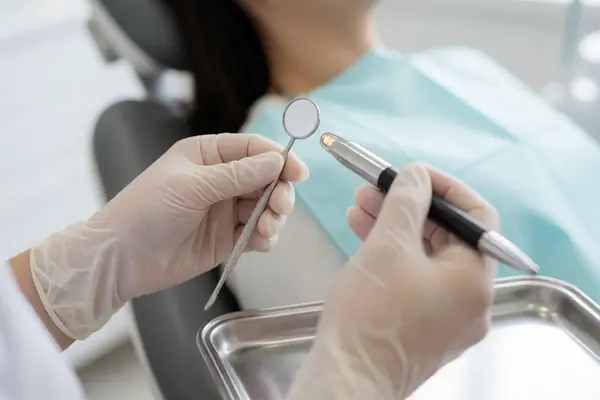
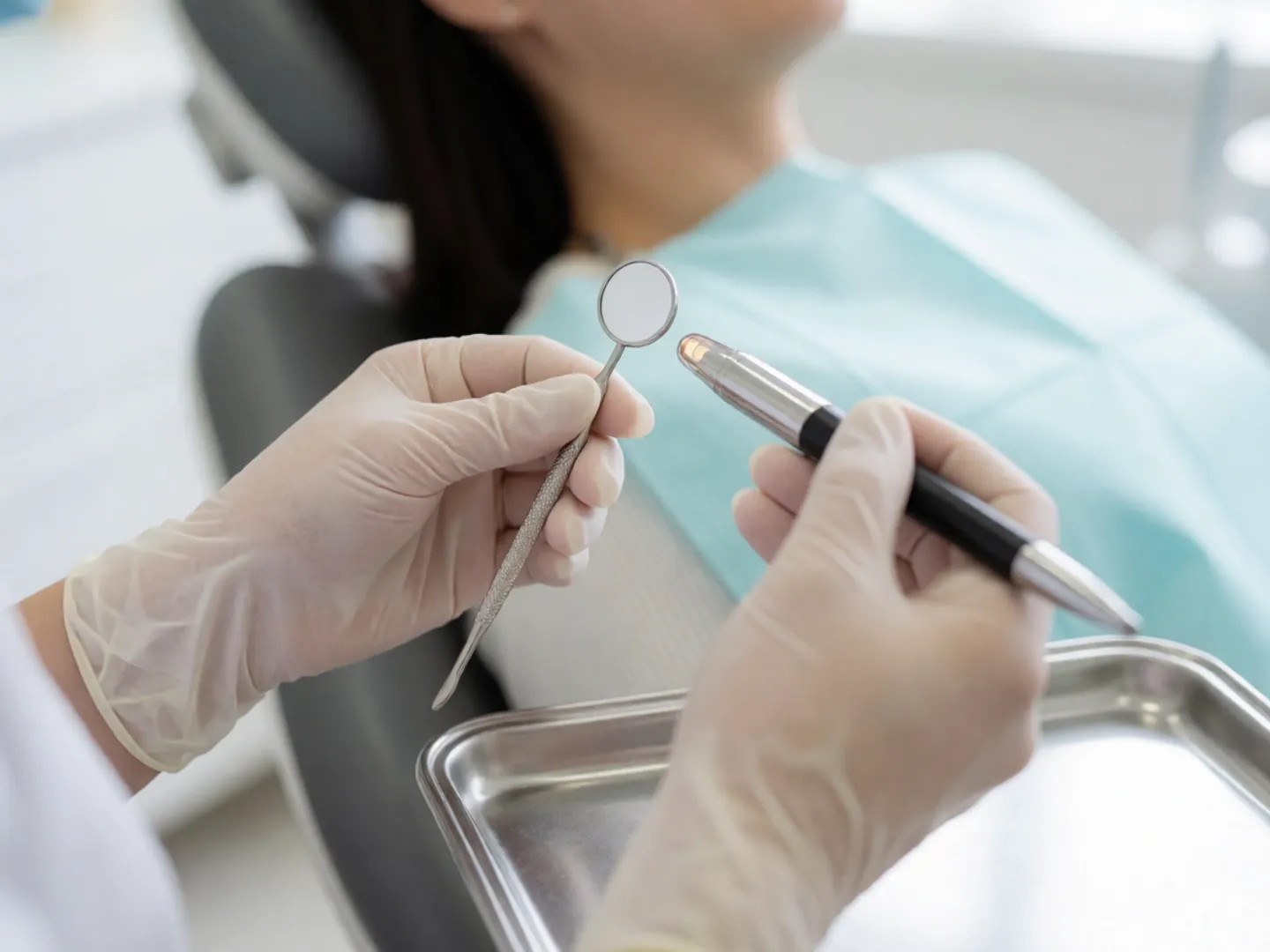
A GP or dentist will usually ask about your symptoms, look and feel inside your mouth, and may feel your neck and jaw. You can ask for someone else to be in the room.
What happensTHE CONTEXT
The NHS stresses that these symptoms are very common and can be caused by other conditions. Having one does not mean you have mouth cancer.
See the numbersGeneral information only, not medical advice. For advice about your own health, speak to a doctor, pharmacist or other qualified health professional.
A QUICK SIGN CHECK
Pick a sign to see what NHS and Cancer Research UK pages say about it. The bar shows how strongly the guidance points to getting it checked by a GP or dentist.
Based on NHS.uk Symptoms of mouth cancer (reviewed 19 June 2023) and Cancer Research UK. General information only, not medical or dental advice.
WHAT HAPPENS NEXT
This is how the NHS describes the usual path. A referral is not a diagnosis: the NHS says an urgent referral does not definitely mean you have cancer.

They ask about symptoms, lifestyle and other conditions, look and feel inside the mouth, and may feel the neck and jaw.
If symptoms could be cancer, you may get an urgent referral for tests or to see a hospital specialist.
The main tests are usually a biopsy, a small sample of cells from the area, and an X-ray, ultrasound, CT or MRI scan.
The NHS says results usually come within 2 weeks, and that a longer wait does not mean anything is wrong.
TWO NUMBERS WORTH KNOWING
One figure on age from the NHS,
one on head and neck cancers from Cancer Research UK.
66–70 years
When most people are diagnosed
The NHS says anyone can get mouth cancer, but the risk increases with age, and most people are diagnosed between the ages of 66 and 70.
AGE · NHS
13,812
Head and neck cancers a year, UK
Cancer Research UK counts 13,812 new head and neck cancer cases a year in the UK (2019 and 2021 to 2022). Head and neck cancers include cancers of the mouth.
NEW CASES · CANCER RESEARCH UK
Cancer Research UK also reports that in England in 2022, 45% of head and neck cancers with a known stage were diagnosed at an early stage (stage I or II).
WHO IS MORE LIKELY TO GET IT
The NHS says it is not always clear what causes mouth cancer. You may be more likely to get it if you smoke or chew tobacco, betel nut or paan, drink a lot of alcohol, have leukoplakia, have had a lot of sun or sunbed exposure, have had cancer before or have a weakened immune system.
It has also been linked to some types of HPV infection in the mouth. The NHS suggests cutting down on alcohol, not drinking more than 14 units a week, and trying to quit smoking and chewing tobacco, betel nut or paan.
Questions
The NHS says it can affect any part of the mouth, including the gums, tongue, inside the cheeks or the lips. Cancer Research UK groups it with oropharyngeal cancer, in the part of the throat just behind the mouth.
The NHS symptoms page says to see a GP, and that a dentist can also help with ulcers, lumps, patches or pain in the mouth.
Not on its own. Cancer Research UK says white patches (leukoplakia) and red patches (erythroplakia) are not cancer but may lead to it if left untreated, and patches can also be caused by thrush.
Yes. The NHS says you can ask for someone else to be in the room while the GP or dentist examines you, and you may want to bring someone when results are explained.
The NHS points to Macmillan Cancer Support, whose free helpline on 0808 808 00 00 is open every day from 8am to 8pm.
Updated
ABOUT THIS NAME
doodledent.com is part of the DoodleSale portfolio. It isn't in an auction right now, but you can ask about leasing it.